
English| EUR
Suggested for you
More currencies
Choose a language
Old Cairo's compact Coptic quarter rewards independent exploration with medieval churches, Roman fortifications and quiet courtyards tucked between narrow lanes. A self-guided walking tour lets you control your pace through this layered district where most sites are free to enter. This guide maps the route, clarifies the one ticketed stop and identifies the logistics that matter.
Quick answer
An old cairo self guided walking tour covers the Coptic Museum (280 EGP entrance) and five major churches within a walkable half-square-kilometer grid, open daily 09:00–17:00. Most visitors complete the circuit in two to three hours, though the museum alone justifies ninety minutes. Arrive between 09:00 and 11:00 for cooler temperatures and emptier lanes before midday crowds and heat.
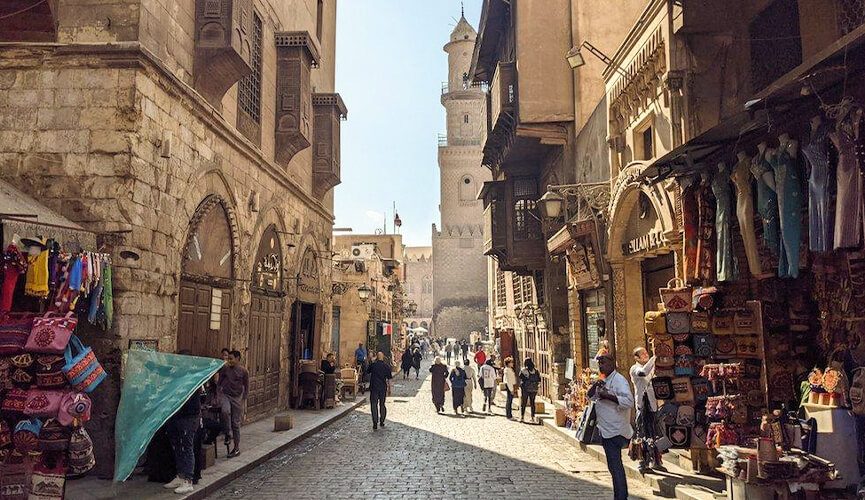
The Fortress of Babylon anchors the district—its twin Roman towers mark the entry point where most self-guided routes begin. Beyond the gate lies a maze of stone pathways connecting the Hanging Church, perched above the fortress's southern bastion, to the cavern church of Abu Serga and the narrow alley housing Ben Ezra Synagogue. Each structure sits within two hundred meters of the next, making the old cairo self guided walking tour a study in efficient medieval urban planning rather than a stamina test. The Coptic Museum occupies the district's northeast corner and functions as both collection and contextual anchor. Its galleries trace fifteen centuries of Christian Egypt through illuminated manuscripts, wooden iconostasis panels and Fayum portraits that predate the Arab conquest. The 280 EGP entrance covers the museum; the churches themselves request no admission, though donation boxes sit near each exit. Most independent walkers sequence the museum first to decode the iconography they will encounter in the sanctuaries, then move counterclockwise through the ecclesiastical circuit. Compass navigation fails in Old Cairo—the lanes twist to follow the fortress's original Roman grid, now half-buried and re-oriented by centuries of Nilotic silt deposition. Street signs are sparse, but the district's small footprint means backtracking costs minutes rather than hours. The Church of St. George crowns the northern tower and requires separate entry from the main fortress complex; many self-guided routes skip it in favor of spending that time inside the Hanging Church's triple-aisled nave. Water sources are limited inside the quarter, and shade vanishes by noon once you leave the covered passages. The walk concludes at Mar Girgis Metro station, two hundred meters north of the fortress gate. That subway connection makes Old Cairo accessible as a morning excursion from central Cairo hotels, with the return journey taking thirty minutes. Independent explorers gain flexibility that group tours cannot offer—the ability to linger in Ben Ezra's geniza chamber or skip the museum's textile wing—but assume responsibility for reading site placards and connecting architectural fragments into narrative. The old cairo self guided walking guide assumes basic comfort with ambiguity and a willingness to retrace steps when a promising alley dead-ends at a residential courtyard.
“The district's small footprint means backtracking costs minutes rather than hours.”
This route covers the core landmarks of Coptic Cairo in a single visit, ideal for independent travelers with three to four hours to spare. The sequence minimizes backtracking and follows the natural flow of the walled compound.
Begin at the museum to gain context on Coptic art, manuscripts, and religious heritage—budget 60–75 minutes. The entrance fee covers this museum; most other sites are free.
Walk south to this 7th-century basilica suspended above a Roman gatehouse—allow 20–30 minutes to view the iconostasis and wooden roof. Services may restrict access on Sunday mornings.
Continue to the circular Greek Orthodox church, rebuilt after an 1882 fire but retaining medieval foundations—spend 15–20 minutes here. The adjacent Monastery of St. George is typically closed to casual visitors.
Head east to this 4th-century church, reputedly built over the crypt where the Holy Family sheltered—allocate 20 minutes. The sunken nave sits below street level due to rising Nile silt over centuries.
Finish at this 9th-century synagogue, once a Coptic church and later the site of the Cairo Geniza discovery—plan 20 minutes. The restored interior showcases Hebrew inscriptions and Star of David motifs.
Allow 15–20 minutes to stroll the narrow alleys, photograph exterior details, and exit via the main gate on Mari Gerges Street. The Coptic Cemetery and Roman towers are visible along the perimeter if time permits.
The best arrival window is 09:00–11:00, as mornings provide a cooler environment and smaller crowds for your self-guided walking tour. Starting early ensures a peaceful experience before the midday heat and peak visitor numbers.
Cooler temperatures (15°C–25°C)
These months offer the most comfortable weather for walking outdoors.
Hot and sunny (30°C–40°C)
High temperatures make extended outdoor walking challenging during these months.
—
Mid-week start times offer the most consistent access to quiet streets and historical sites.
Verdict: For the most comfortable experience, plan your tour for weekday mornings during the cooler months of October or November.
The Old Cairo historic area is most efficiently accessed via the Cairo Metro system. The primary entry point is located at 3 Mari Gerges, Kom Ghorab, Old Cairo, Cairo Governorate, Egypt.
Line 1 (Blue Line) to Mar Girgis Station
Direct to 3 Mari Gerges
Exit Mar Girgis Station and follow signs to the Coptic Museum
Upon exiting the Mar Girgis Metro station, follow the clearly marked pedestrian paths leading directly to the entrance at 3 Mari Gerges. Confirming your destination with the driver as the Coptic Museum will ensure you are dropped off at the correct pedestrian gate.
The site is open daily to accommodate self-guided explorers throughout the week.
The majority of sites on a self-guided walking tour of Old Cairo are accessible to the public at no cost. The primary admission fee is specifically for entry to the Coptic Museum.
Verdict: A typical adult pays 280 EGP to enter the Coptic Museum, while all other historical walking routes remain free of charge.
Old Cairo's active churches and monasteries require modest dress and quiet behavior. Respect for sacred spaces and the resident Coptic community ensures a welcome experience.
Everything you need to know about old cairo self guided walking tour
The area is quite compact, making an old cairo self guided walking tour relatively straightforward for those with a map or digital guide. Navigating the narrow alleys reveals historic landmarks like the Hanging Church and the Ben Ezra Synagogue within a short walking distance.
Entrance fees are limited to 280 EGP, which covers the Coptic Museum. Most other historic churches and sites visited during an old cairo self guided walking tour are free to enter.
You should bring comfortable walking shoes, a bottle of water, and modest clothing suitable for visiting active places of worship. Sun protection is also recommended, especially if you explore the district during the warmer afternoon hours.
The best arrival window is between 09:00 and 11:00. This ensures a cooler and less crowded experience, allowing you to enjoy the spiritual atmosphere before the midday heat.
While the Coptic Museum requires an entrance fee, most churches and archaeological zones along the route are free to explore. Always respect local customs when visiting these sacred Coptic Cairo landmarks.
Yes, the Coptic Museum is a major highlight located at 3 Mari Gerges. It is included in your entry fee and provides vital historical context to the religious architecture found throughout the neighborhood.
The district is best accessed via the Cairo Metro Line 1 to the Mar Girgis station. From there, you are within walking distance of all primary sites featured in an old cairo self guided walking tour.